Impakter
  • Environment
    • Biodiversity
    • Climate Change
    • Circular Economy
    • Energy
  • FINANCE
    • ESG News
    • Sustainable Finance
    • Business
  • TECH
    • Start-up
    • AI & Machine Learning
    • Green Tech
  • Industry News
    • Entertainment
    • Food and Agriculture
    • Health
    • Politics & Foreign Affairs
    • Philanthropy
    • Science
    • Sport
  • Editorial Series
    • SDGs Series
    • Shape Your Future
    • Sustainable Cities
      • Copenhagen
      • San Francisco
      • Seattle
      • Sydney
  • About us
    • Company
    • Team
    • Global Leaders
    • Partners
    • Write for Impakter
    • Contact Us
    • Privacy Policy
No Result
View All Result
Impakter logo
No Result
View All Result
Six Tips for Eating Out Sustainably

Six Tips for Eating Out Sustainably

Eating out doesn't have to mean breaking out of your sustainable habits

Katherine TobinbyKatherine Tobin
November 29, 2021
in Eco Life, Food & Drinks
0

Whilst it’s convenient and cost-efficient to cook at home, eating out can be a great way to try new dishes, support local restaurants and cafes, and indulge in a meal you haven’t made yourself. But how can you eat out ethically? Here are six tips for sustainable dining.

Opt for a vegetarian or vegan option

With cattle rearing alone producing more greenhouse gases than transport, choosing a vegetarian or vegan meal is a great way to reduce your environmental impact and support animal welfare. What’s more, the days of boring vegan and vegetarian options are over – now most restaurants and cafes serve a diverse range of delicious meat-free options. It’s a great way to discover new dishes and get inspiration for cooking at home.
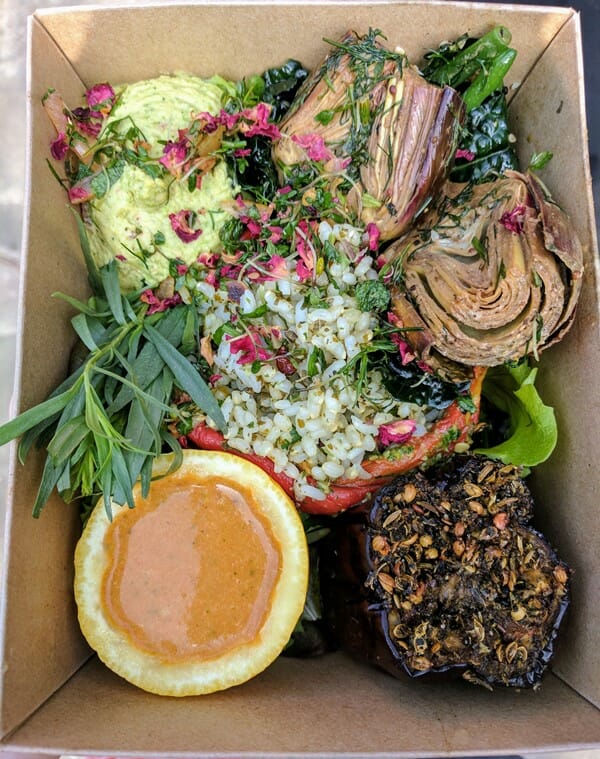
In the photo: Cropbox in Amsterdam delivers healthy vegan lunch boxes Tuesday through Thursday. Photo credit: Amsterdam Foodie

Take home leftovers

Sometimes portion sizes are just bigger than you can manage in one sitting. Instead of these extras going in the bin, and later into landfill, ask to take leftovers home with you. Make sure the take away box is recyclable or go one step further and bring your own container with you. You’ll reduce food waste, get your money’s worth, and have lunch sorted for the next day!

Support local, seasonal, and sustainable foods

Think about where your food is coming from and whether it’s typical for that time of year. In terms of meats and fish, look for indicators on the menu – the more local, ‘native’, and organic, the better. For fruit and vegetables, check they are in season, are from a local and sustainable source, and have not traveled thousands of miles to get to the dining table.

Say no to straws

The impact of plastic straws on the environment and animals is now widely known. Instead of adding to this damage, refuse plastic straws and ask restaurants to do the same. Even better, invest in a metal or glass straw for your bag so you always have a straw on hand when you need one.
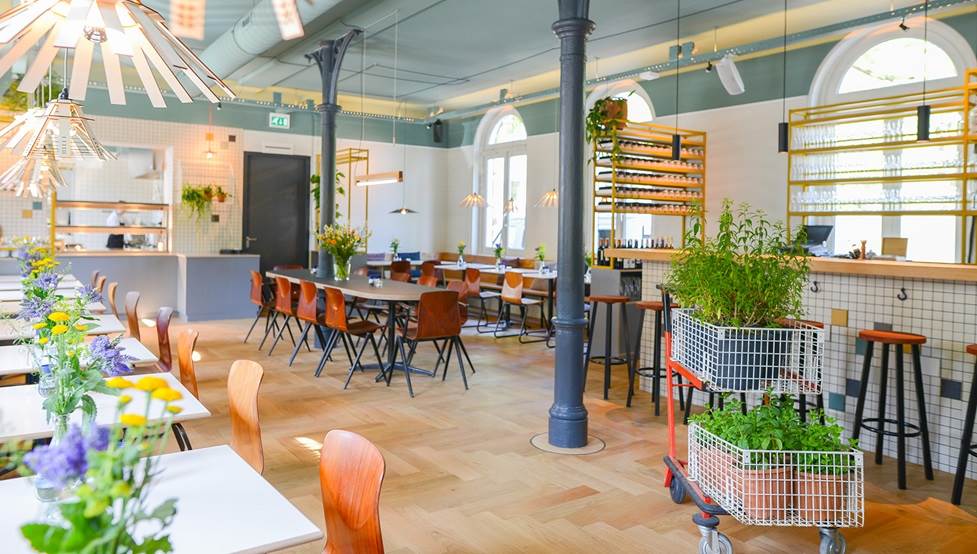
In the photo. Amsterdam restaurant Instock saves 1000 kilograms of surplus produce from being thrown away by transforming it into culinary masterpieces. Photo credit: Iamsterdam.com

Travel together

Rather than arriving in separate vehicles, try sharing a lift, walking, or taking public transport to the restaurant to reduce your carbon footprint.

A sustainable restaurant includes the workers as well as the food

How are the staff treated? What is the working environment like? Does the restaurant have a good reputation among staff and customers alike? Asking these types of questions before picking where to eat enables you to support businesses whose principles you agree with. The UN Sustainable Development Goals (SDGs) are not just about the environment, but also promote sustainable living and working conditions for all. Going to a restaurant whose values you support is a great way to promote those who are in the business for the right reasons.


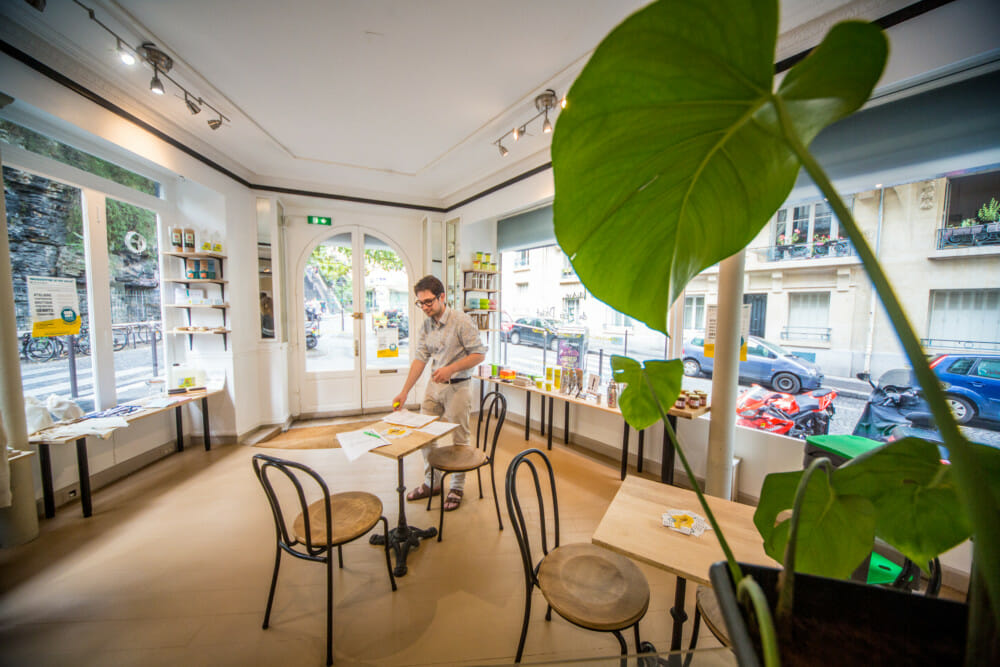
Editor’s Note: The opinions expressed here by Impakter.com columnists are their own, not those of Impakter.com. — In the Featured Photo:  La Maison Zéro Déchet in Paris. Featured Photo Credit: Stefano Borghi

Tags: eating less meatsustainable lifestylevegan diet
Previous Post

Apple vs. Israeli Surveillance Supplier: “Amoral 21st century mercenaries” 

Next Post

COP26 – Now The Talking’s Done, Let’s Get To Work!

Related Posts

vegan cheese
Food and Agriculture

Biotech Meets Veganism: How One Startup Uses Tech to Create Vegan Cheese

As of April 2022, there were around 78 million vegans worldwide. In 2023, we know that 16% of US millennials...

byAmy Lewis
December 19, 2023
vegan
Environment

Are Plant-Based Alternatives Always the Greenest Option?

Veganism has long been lauded as not only a healthier diet for your body, but also as a plant-based lifestyle...

byOlivia Fowler
May 6, 2023
Slow Living: The TikTok Trend Promoting Personal and Environmental Wellbeing
Culture

Slow Living: The TikTok Trend Promoting Personal and Environmental Wellbeing

Never has the phrase “time is money” been more true than it is today. It’s a known fact that the...

byOlivia Fowler
March 12, 2023
The Unintentional Eco-friendly Moments of Netflix’s “Wednesday”
Eco Life

The Unintentional Eco-friendly Moments of Netflix’s “Wednesday”

Ladies and gentlemen welcome to Nevermore Academy, a school that nurtures outcasts and supernatural students. Spooky and mystery shroud these...

byNapat Siriyium
December 27, 2022
Quick Vegan Breakfast Ideas To Kickstart Your Day
Eco Life

Quick Vegan Breakfast Ideas To Kickstart Your Day

At first, starting your vegan journey can be somewhat confusing. For starters, what exactly is it all about?  Well, going...

byNapat Siriyium
October 13, 2022
Are Vegan Meats Really That Good?
Eco Life

Are Vegan Meats Really That Good?

As people are becoming more aware of the environmental impact caused by the meat industry and as they grow more...

byNapat Siriyium
August 12, 2022
Why Fixing Is Better Than Replacing
Circular Economy

Why Fixing Is Better Than Replacing

Editor’s Note: This is the fifth article in the series “Our Sustainable Future”. The first article is here (how to...

byMagda Olchawska
July 24, 2022
The Vegan Transition
Eco Life

The Vegan Transition

There are about 78 million vegans around the world. Vegans have chosen a plant-based diet that is absent of any...

byRachel Cross
April 19, 2022
Next Post
COP26 – Now The Talking’s Done, Let’s Get To Work!

COP26 - Now The Talking’s Done, Let’s Get To Work!

Recent News

Marathoners

8 Must-Know Websites for Marathoners

January 16, 2026
Why Glyphosate, the World’s Most Widely Used and Sued Herbicide, Is Under New Scrutiny

Why Glyphosate, the World’s Most Widely Used and Sued Herbicide, Is Under New Scrutiny

January 16, 2026
The Imperative of a Nature-Positive Future

The Imperative of a Nature-Positive Future

January 16, 2026
  • ESG News
  • Sustainable Finance
  • Business

© 2025 Impakter.com owned by Klimado GmbH

No Result
View All Result
  • Environment
    • Biodiversity
    • Climate Change
    • Circular Economy
    • Energy
  • FINANCE
    • ESG News
    • Sustainable Finance
    • Business
  • TECH
    • Start-up
    • AI & Machine Learning
    • Green Tech
  • Industry News
    • Entertainment
    • Food and Agriculture
    • Health
    • Politics & Foreign Affairs
    • Philanthropy
    • Science
    • Sport
  • Editorial Series
    • SDGs Series
    • Shape Your Future
    • Sustainable Cities
      • Copenhagen
      • San Francisco
      • Seattle
      • Sydney
  • About us
    • Company
    • Team
    • Global Leaders
    • Partners
    • Write for Impakter
    • Contact Us
    • Privacy Policy

© 2025 Impakter.com owned by Klimado GmbH