When looking in the fridge recently, your correspondent noticed a package of minced meat sitting at the back of one of the shelves, totally forgotten. A check of the best-before date revealed it had expired two days earlier. Like so many consumers, your correspondent felt an internal struggle emerging: risk food poisoning or discard a potentially safe product? One possible solution for this conundrum could be “intelligent packaging.”
Intelligent packaging monitors the condition of the food or the environment surrounding the packaged food. Standard packaging plays one or more of four roles: protection, communication, convenience and containment.
Protection can be regarded as the most important function, as it can influence whether the food ends up as waste. Intelligent packaging can fulfil the four main functions and can also provide information about the condition and freshness of the food.
Radio-frequency identification (RFID) tags, electronic labels and QR codes or barcodes are one form of intelligent packaging, mainly used for storing product information, ensuring its authenticity and easily transferring it in the supply chain.
They can also expand the information on the packaging by directing consumers or logistics staff to online information in combination with smartphone applications. For example, some apps allow customers to be reminded of nearly expired best-before dates or can even forecast the remaining shelf life based on the actual storage conditions. The customer only needs to scan the provided label on the packaging into the app and input the temperature of the fridge, and their smartphone will calculate a more exact expiration date and remind them before it is due.
All these benefits can fight food waste.
Packaging fitted with sensors or indicators is another form of intelligent packaging. These can monitor environmental conditions or can be placed inside the packaging to detect food quality directly.
Time-temperature indicators are relatively simple and inexpensive gadgets that change colour depending on the environmental temperature. This is especially helpful for refrigerated products, which need properly adhered-to cool chains (refrigerated storage and transport) and regulated temperatures to stay safe to consume.
For example, Fresh-Check is a heavy blue oval whose centre is clear if the product has been kept cool. When the colour of the centre matches the blue outer ring, the product should be consumed soon; when the centre is darker than the outer ring, freshness is no longer guaranteed. Consumers do not always go directly home from the supermarket, and the interior of parked cars can reach extraordinarily high temperatures, making this a potentially helpful indicator.
Related Articles: Meat, Monopolies, Mega Farms: How the US Food System Fuels Climate Crisis | The Bullfight Between Plant-Based Meat and Beef
Another example of intelligent packaging are freshness indicators that monitor the quality of the packaged food directly. Food spoilage often occurs because of microbial growth, which can also lead to chemical changes in the products. Freshness indicators placed inside the packaging can detect these spoilage markers and indicate by colour changes the level of food degradation.
One example of these kinds of indicators was SensorQ by the now-defunct company Food Quality Sensor International. When the packaged food was fresh, the colour of the label was bright orange. The label changed to brown when it detected a critical level of molecules released by the microbial spoilage processes of protein-rich food such as meat and poultry.
Sensors are usually somewhat more complex than indicators, consisting of a receptor that picks up a specific quality-related parameter and a transducer that displays the generated information. Sensors can be used for detecting the concentration of certain gases or the formation of pathogens.
Manufacturers usually calculate best-before dates by estimating environmental conditions for the whole lifetime of the food. As conditions in real life can vary from estimates, the calculated best-before dates can be imperfect. Both indicators and sensors could reduce food waste and increase consumer safety. They could be a useful addition to the traditional best-before date and may even replace it under certain circumstances.
Data carriers like RFID tags and barcodes are already widespread in the food industry. But indicators and sensors have struggled to be widely adopted. SensorQ never took off and another system, Food Sentinel, also went bust. It costs companies more to add indicators and sensors because they are made of expensive materials. This is an obstacle in fast-moving consumer goods such as food.
And intelligent packaging has risks that need to be assessed before it is widely adopted. Increased use of colour-changing labels could lead to unfavourable changes in buyer behaviour. Consumers may reject only slightly discoloured labels, leading to an increase in unsold food – which goes directly against the goal of reducing food waste.
Packaging with intelligent labels may not be recyclable. And consumers should not be encouraged to rely solely on intelligent packaging, as the systems may fail or be misused.
At this stage, intelligent packaging sensors and indicators may be some way off from replacing traditional best-before dates. The system needs to become more robust against false indications, and consumer reactions to indicators need investigation. Research continues. Until those kinks are ironed out, consumers will need to rely on their eyes, nose and tongue to decide whether to eat the forgotten food at the back of the fridge.
— —
This article was originally published by 360info™ on June 13, 2022, under Creative Commons.
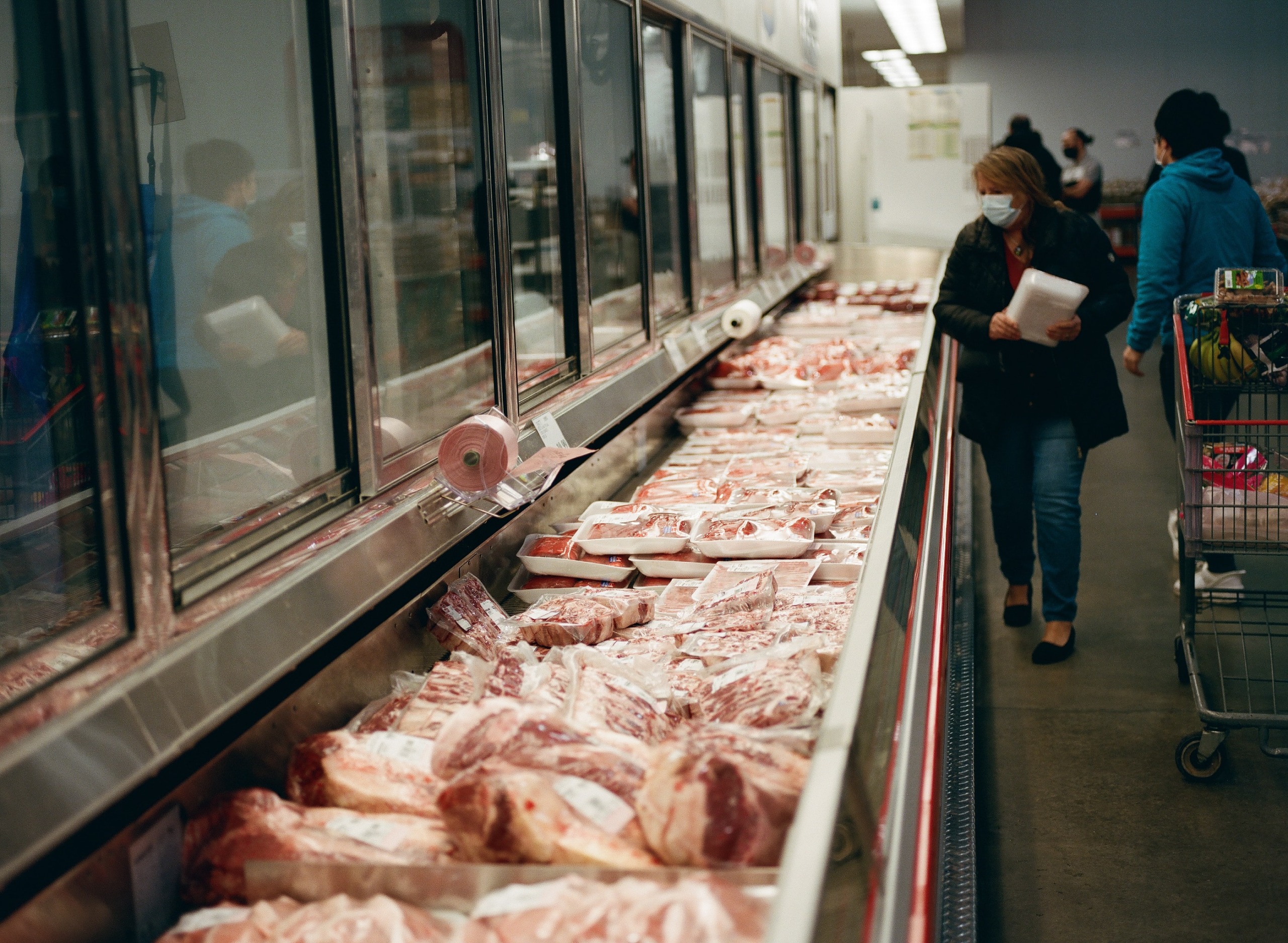
Editor’s Note: The opinions expressed here by the authors are their own, not those of Impakter.com — In the Featured Photo: Meat section at a supermarket. Featured Photo Credit: Tyler Menezes.