Climate and energy experts’ urgent appeal to cease all new fossil fuel projects is being collectively shunned by countries around the world whose response to soaring energy prices and disruption is a “gold rush” for new fossil gas production and infrastructure.
The start of the Russo-Ukrainian war and ensuing sanctions upon the Russian economy, which is heavily reliant on gas and oil exports, spurred a global energy crisis to which governments including the US, the EU, Germany, the UK, and Canada, respond by increasing investments in new gas production, distribution, and use.
These are the results of a new report from Climate Action Tracker (CAT), which raises the alarm over the overt risks these new projects pose to the world’s climate as they would lock the global economy into at least another decade of carbon-intensive energy system.
The CAT report’s findings
The EU, for instance, is incorporating liquefied natural gas (LNG) projects into its REPowerEU plan, which is aimed at reducing Europe’s dependence on Russian gas.
Prior to the war, Russian gas accounted for 40% of Europe’s gas supplies. Up to €13 billion has been set aside as part of the REPowerEU plan to fast-track funding and permits for 30 gas pipeline and infrastructure projects aimed at covering those needs.
However, the CAT report found these projects would not only cover past gas imports from Russia but could wind up increasing Europe’s gas supplies by 25% compared to what they were before the war. The EU is for this reason facing a legal challenge from NGOs including ClientEarth and Friends of the Earth Europe as their new gas plans violate their own environmental laws.
The EU has also signed a deal with the US to export additional LNG to Europe through increased fracking.
Germany, Italy, and Egypt have in the meanwhile signed deals with Qatar for gas supplies, with Algeria also agreeing to export gas via pipeline to Italy and Canada planning on expediting new LNG projects to increase exports.
In the UK, Chancellor of the Exchequer Rishi Sunak recently announced a tax relief on oil and gas to which dozens of prospective fossil fuel projects qualify. If all projects are approved, up to 899 million tonnes of greenhouse gases would be released into the atmosphere.
Developing countries are also participating in the “gold rush” for fossil fuels. Nigeria is reviving old gas pipeline projects, and countries with previously no fossil gas exports like Senegal and the Republic of Congo are now encouraged to supply gas to Europe.
Since the begging of the Ukraine war, domestic production of fossil fuels has increased in the US, Canada, Norway, Italy and Japan, while new deals over long-term imports have been sealed or extended in the UK, EU, Germany, Poland, and Italy.
Yet, none of these new projects will even be built in time to alleviate the current energy crisis. Instead, as the report underlines, the projects promise to increase emissions at the same crucial moment when the world is on the brink of breaching the 1.5°C threshold for limiting global warming set up by the Paris Agreement in 2015.
Related articles: First UN Climate Conference Since the Start of the Ukraine War Begins | “Bad Day for EU Parliament”: Three Key Climate Laws Rejected
Energy supplies in the wake of COVID-19 and Russo-Ukrainian war: “same mistake, twice over”
The CAT report draws attention to world governments’ repeated failure to seize the opportunity created by global crises like COVID-19 and the current Russo-Ukrainian conflict to rearrange their energy supplies system away from fossil fuels.
Experts denounce a pattern of skewed approaches and decisions on the part of world governments – particularly wealthy nations – which already led them to spend billions from their post-pandemic economic recovery packages on maintaining the status quo rather than accelerating the energy transition toward renewables.
“The world missed the massive opportunity it had to use the post-pandemic recovery packages to support decarbonisation of their economies – and now it seems this will happen all over again, with this new crisis,” says Bill Hare, CEO of Climate Analytics, one of CAT’s partner organisations.
Instead of attempting to decarbonise, however, governments around the world are approving new plans for fossil fuel production and infrastructure expansion on account of replacing Russian gas.
If these projects go ahead, the CAT report warns they would either result in enormous stranded assets or entrap the world in a climate breakdown beyond repair.

Can we use gas as a “transition” fuel towards green energy?
Some governments argued that gas production is merely a means to an end assisting in the global transition toward a zero-carbon energy system as gas produces less carbon dioxide than coal. The EU, for instance, argues their investments in new LNG projects simply are “short-term measures” meant to secure energy while more renewables are built.
Yet, last year, the International Energy Agency (IEA) – which was renown for holding rather conservative views on global warming and green energy – urged world governments to abandon all gas and oil projects from 2021, releasing a comprehensive roadmap for implementing a transition to a net-zero energy system by 2050.
Moreover, a recent analysis from TransitionZero showed that soaring gas prices, and the plummeting cost of renewable energies such as solar power and wind, made the cost of directly switching from coal to renewable energies cheaper than using gas as a “transition” fuel.
The CAT report is yet another sign that governments’ collective inefficiency to address climate change head and hands-on is not due to the lack of solutions or means, but rather reflects a blatant lack of political will.
The latest IPCC report, published in August, warned that it is “now or never” for cutting down emissions and giving the world a chance to limit the damage caused by global warming. Yet, giant fossil fuel “carbon bomb” projects are sprouting up around the world in parallel to the new plans for gas production and infrastructure expansion being approved by governments around the world on account of replacing Russian gas, all of which goes directly against recent proposals to increase renewable energy targets such as the European Green Deal or the Glasgow Pact made at COP26.
“Something has to change,” said Bill Hare. “We cannot go on responding to short-term shocks, be they pandemics or energy shocks from conflict, by taking steps that would increase emissions, ignoring the looming crisis of climate change.”
World governments are quickly running out of time to implement the climate action plans and promises they loftily parade at world conferences, intergovernmental deals and electoral run-offs. As countless reports before, the CAT analysis contains a plethora of solutions and practical guidelines to alleviate global warming before it is too late.
Wealthy nations, who not only are disproportionately responsible for the current climate situation but actually possess the means to begin a green transition and set an example, have to take the first leap towards radical and swift decarbonisation of our energy systems – again, “now or never.”
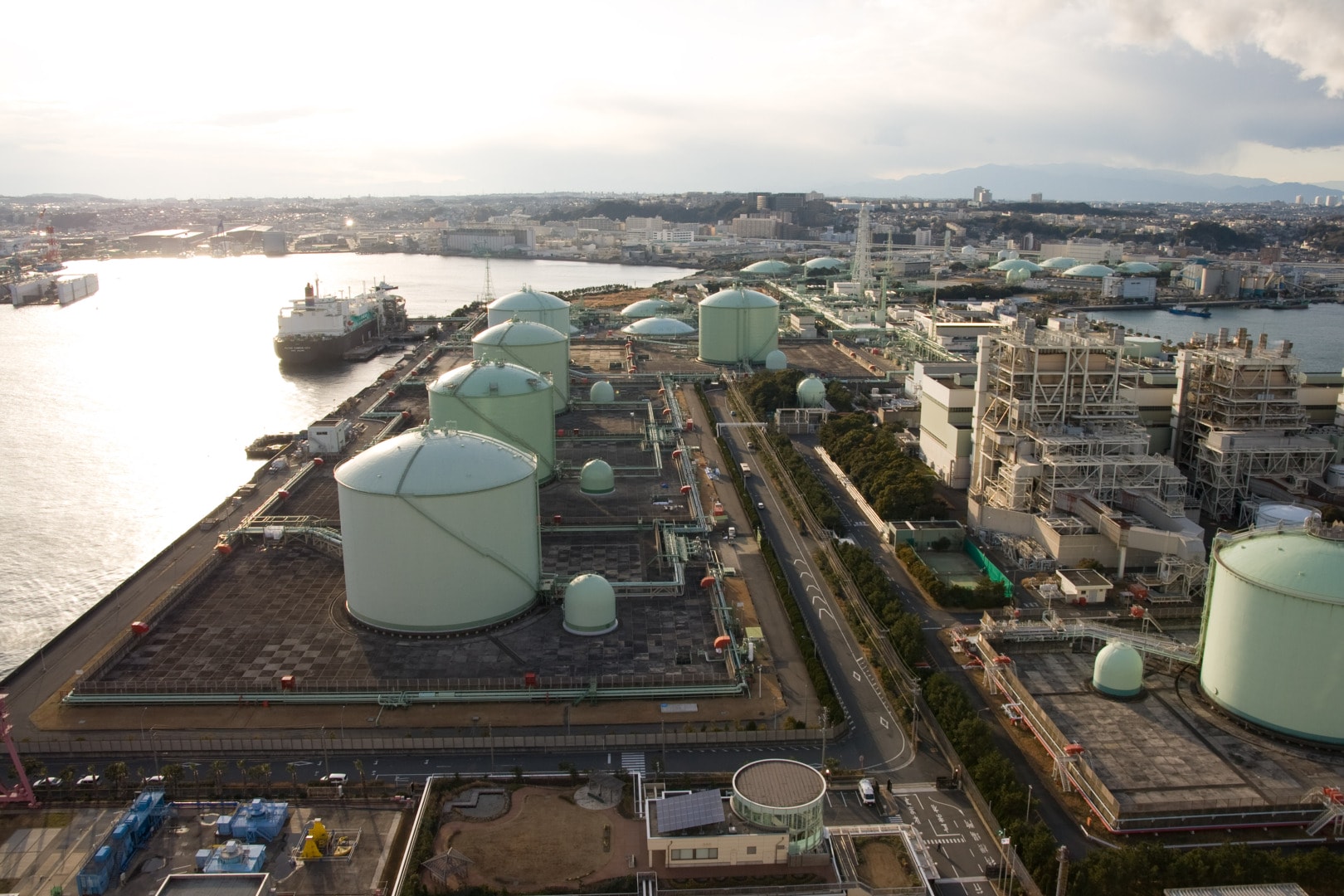
Editor’s Note: The opinions expressed here by Impakter.com columnists are their own, not those of Impakter.com — In the Featured Photo: Negishi LNG Terminal, Yokohama City, Kanagawa Pref., Japan. Featured Photo Credit: Σ64/Wikimedia Commons.