Impakter
  • Environment
    • Biodiversity
    • Climate Change
    • Circular Economy
    • Energy
  • FINANCE
    • ESG News
    • Sustainable Finance
    • Business
  • TECH
    • Start-up
    • AI & Machine Learning
    • Green Tech
  • Industry News
    • Entertainment
    • Food and Agriculture
    • Health
    • Politics & Foreign Affairs
    • Philanthropy
    • Science
    • Sport
  • Editorial Series
    • SDGs Series
    • Shape Your Future
    • Sustainable Cities
      • Copenhagen
      • San Francisco
      • Seattle
      • Sydney
  • About us
    • Company
    • Team
    • Global Leaders
    • Partners
    • Write for Impakter
    • Contact Us
    • Privacy Policy
No Result
View All Result
Impakter logo
No Result
View All Result
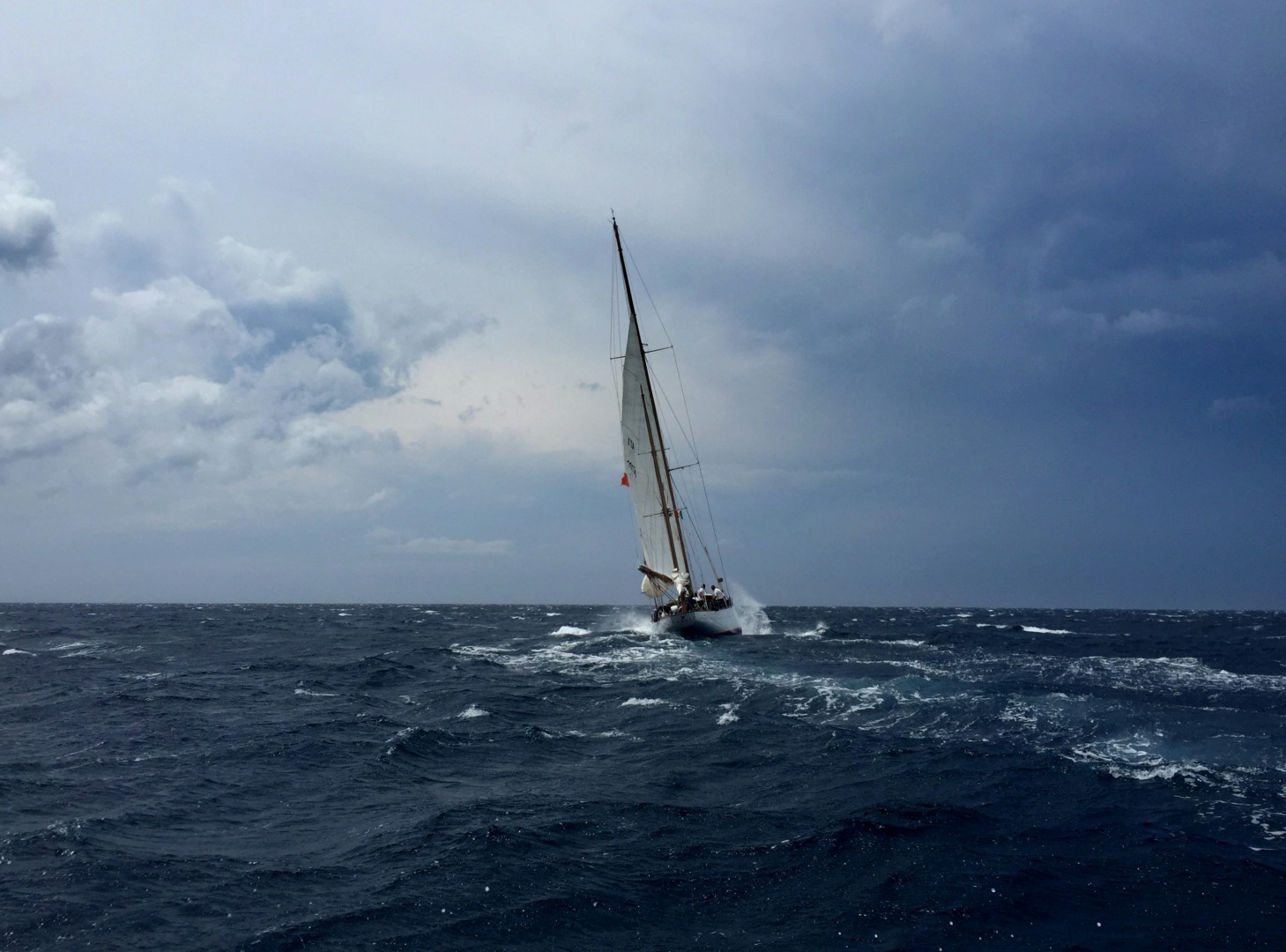
The ESG Ship Adrift: Navigating Uncharted Waters

The ESG Ship Adrift: Navigating Uncharted Waters

As Europe navigates the turbulent waters of rising defense spending and energy security, its ability to reconcile ESG goals with new geopolitical realities will define its sustainability strategy in the post-war landscape.

Georges ArbajebyGeorges Arbaje
March 21, 2025
in Energy, ESG News
0

Once the pride of Europe’s policy fleet, ESG regulations are starting to resemble a ship adrift — battered by waves of geopolitical uncertainty and forced to abandon its carefully charted course toward a sustainable horizon.

The latest gust? Earlier this week, U.S. President Donald Trump and Russian President Vladimir Putin held a phone call that culminated in an agreement on a very partial 30-day ceasefire — ostensibly halting attacks on energy and infrastructure. Yet barely an hour after the ink was metaphorically dry, both Russia and Ukraine launched drone strikes deep into each other’s territory. For some, this came as a shock. For others — familiar with Russia’s checkered track record on honoring ceasefires — it was business as usual.

But the plot thickened further. On Wednesday, Trump proposed an extraordinary add-on to the ceasefire plan: the United States would assume ownership and operational control over Ukraine’s nuclear power plants — a move framed as a safeguard for critical infrastructure, but one that raises more geopolitical eyebrows than it answers questions.

Within those questions lies a deeper concern: Europe’s gradual loss of protagonism in a conflict that is reshaping the world order on its very doorstep. The EU now finds itself reassessing its own energy capabilities and defense spending — two pillars once seen as peripheral to its ESG-driven identity, now thrust to the center of its strategic recalibration. 

Sailing Through the Storm: The Intersection of ESG and Energy Security

The political theatre of ceasefires and control proposals might dominate headlines, but beneath the surface, a quieter — and arguably more consequential — shift is underway. 

The energy debate is rapidly being recast as a matter of sovereignty and national defense for European countries. Pipelines and power grids are no longer solely considered green infrastructure; they have become strategic assets. This shift in perspective is reverberating throughout the EU’s regulatory agenda.

In that context, recent murmurs of a potential economic thaw with Moscow are raising alarms in capitals closer to the fault lines. EU countries bordering Russia have issued stark warnings: any premature return to Russian oil and gas would not only undermine the bloc’s energy independence but actively threaten its security posture.

The conversation seems to be drifting away from ESG regulations and their long-held importance toward more pressing security concerns. The ESG ship, once a steady force, is being pushed away by a massive wave — the urgent demands of energy security.

The Storm Swells: Rising Defense Spending 

As the storm intensifies, another wave is crashing over the deck: rising defense spending.

Once a no-go zone for ESG-aligned investment, defense is now being quietly rebranded as a contributor to societal resilience. In the halls of Brussels and boardrooms across Europe, the old lines between “sustainable” and “strategic” are being blurred — even redrawn. 

Recently, the European Commission presented a White Paper for European Defence – Readiness 2030, alongside the ReArm Europe Plan, an ambitious defense package designed to unlock financial levers and accelerate Member States’ investment in defense capabilities. 

But while defense spending surges forward with renewed political backing and institutional clarity, it is not the same case for ESG regulations. 

While Europe sharpens its strategic edge on defense, the regulatory edge on sustainability appears to be softening. A recalibration is underway — one in which security imperatives are gaining institutional prominence, while ESG frameworks are being subtly repositioned, repackaged, or simply deprioritized in the background. 

As other priorities and demands shift onto Europe’s radar, how the ESG ship comes out of the storm will determine the continent’s sustainability standards in the new reality that will emerge from the war. The balance between security, defense, and environmental goals will shape Europe’s approach to sustainability in a rapidly changing geopolitical landscape.

The Calm After the Storm: Will ESG Steer Toward Safe Harbor?

The important thing is that Europe’s ESG ship is still afloat. But make no mistake — it’s weathering a storm it was never designed for. Defense spending is rising. Energy pragmatism is replacing environmental purism. And international actors are shifting the balance in unpredictable ways. In a post-war recovery scenario, rebuilding trust in sustainability as a serious policy tool may prove far more difficult than rebuilding physical infrastructure.

What comes next will depend not just on ceasefires or energy deals — but on whether EU leadership is willing to reassert its ESG regulations as a pillar of long-term security and not a casualty of short-term crisis.

Because once this storm passes, Europe will have to decide: was this just a detour — or a complete change in course?

___________________________________________________________________________________

Editor’s Note: The opinions expressed here by the authors are their own, not those of impakter.com — Cover Photo Credit: BOBA JOVANOVIC
Tags: defense budgetenergyEnergy SecurityESGEuropean Union
Previous Post

Africa House Ignites $50B for Africa’s Future

Next Post

The Fight to Save Glaciers and Free-Flowing Rivers From False Climate Solutions

Related Posts

American Seizure of Greenland Would Threaten the Global Order
Politics & Foreign Affairs

American Seizure of Greenland Would Threaten the Global Order

U.S. President Trump has repeatedly called for the annexation of Greenland, an autonomous territory within the Kingdom of Denmark. U.S. officials insist they...

byBenjamin Clabault
January 16, 2026
Russia Raises Alarm Over NATO Military Presence in Greenland, US and Taiwan Seal Semiconductor Trade Deal With Major Investment Commitments, Growing Concerns Over Medical Care in US Immigration Detention, Machado Seeks Influence After High-Stakes Meeting With Trump
Climate Change

Trump’s Greenland Ambitions Strain NATO Unity

Today’s ESG Updates Russia Accuses NATO of Militarising the Arctic: Russia has warned that NATO’s planned deployment to Greenland risks...

byPuja Doshi
January 16, 2026
Five Keys to Understanding Venezuela’s Oil History
Energy

Five Keys to Understanding Venezuela’s Oil History

Venezuela’s oil industry has once again returned to the center of international debate. U.S. President Donald Trump announced new actions...

byYale Climate Connections
January 15, 2026
ESG News regarding Economic Collapse Fuelling Iran Protests Amid Rising Death Toll, U.S. Pressure on Iran Tests Beijing as Tariffs Could Push China Duties Above 70%, EU Offers China Price Pledge Option to Avoid EV Tariffs, Atmosphere Emerges as Major Pathway for Plastic Pollution
Business

Iran Acknowledges 2,000 Deaths as Protests Enter Third Week

Today’s ESG Updates Economic Crisis Drives Largest Protests in Years: Demonstrations that began over the collapse of the currency in...

byPuja Doshi
January 13, 2026
Orsted challenges U.S. suspension of offshore wind projects; global mandatory ESG reporting accelerates; ESG ratings for Saudi firm Maharah; EU legal certainty on sustainability reporting.
Business

Orsted’s US Wind Project Challenge Highlights Regulatory Risk in Clean Energy Investment

Today’s ESG Updates Orsted Challenges U.S. Suspension of Wind Project: Denmark-based renewable developer files court action to overturn the U.S....

byMuhammad Umer Aslam
January 5, 2026
First Year of CSRD Reporting Exposes Data Gaps
Business

First Year of CSRD Reporting Exposes Data Gaps

Today’s ESG Updates CSRD Reporting Proves Difficult: Deloitte finds that many European companies failed to quantify ESG-related capital and operating...

byMuhammad Umer Aslam
December 22, 2025
Canada Sets Green Investment Rules; UK Regulator Probes WH Smith; Louvre Workers Call Off Strike;Trump Allies Clash With Fannie, Freddie Staff.
Business

A New Rulebook for Green Capital: Canada

Today’s ESG Updates Canada Sets Green Investment Rules: Canada will introduce a sustainable investment taxonomy by 2026 to label green...

byEge Can Alparslan
December 19, 2025
Trump media merges with fusion power startup
Business

Trump Media Merges With Nuclear Fusion Company

Today’s ESG Updates Trump Media Merges With Fusion Power Company: Trump Media & Technology Group announced an all-stock merger with...

byPuja Doshi
December 19, 2025
Next Post
Karnali river

The Fight to Save Glaciers and Free-Flowing Rivers From False Climate Solutions

Recent News

End-to-End Logistics

Understanding the Role of Transportation in End-to-End Logistics

January 22, 2026
Work Visa Agents in Australia

10 Trusted Skilled and Work Visa Agents in Australia for Visa Applications

January 22, 2026
ESG News regarding China’s wind power strategy, global renewable energy leadership, U.S. criticism at Davos, and the future of low-carbon energy cooperation

China Defends Wind Power Strategy at Davos

January 22, 2026
  • ESG News
  • Sustainable Finance
  • Business

© 2025 Impakter.com owned by Klimado GmbH

No Result
View All Result
  • Environment
    • Biodiversity
    • Climate Change
    • Circular Economy
    • Energy
  • FINANCE
    • ESG News
    • Sustainable Finance
    • Business
  • TECH
    • Start-up
    • AI & Machine Learning
    • Green Tech
  • Industry News
    • Entertainment
    • Food and Agriculture
    • Health
    • Politics & Foreign Affairs
    • Philanthropy
    • Science
    • Sport
  • Editorial Series
    • SDGs Series
    • Shape Your Future
    • Sustainable Cities
      • Copenhagen
      • San Francisco
      • Seattle
      • Sydney
  • About us
    • Company
    • Team
    • Global Leaders
    • Partners
    • Write for Impakter
    • Contact Us
    • Privacy Policy

© 2025 Impakter.com owned by Klimado GmbH