What could be described as the future of transportation, electric vehicles are on the rise and expected to soon take over the car industry. Already, a multitude of big brand car companies have not only started developing their own electric car — alongside the pioneer of it all Tesla — but have also promised to stop producing gas-powered vehicles after a certain year.
Just last year, General Motors announced their plans to stop selling gas-powered vehicles by 2035. Following suit, Audi also promised to stop selling gas-powered automobiles by 2033.
Overwhelming amounts of evidence suggest electric vehicles are the more sustainable option compared to gas-powered vehicles that emit tens of thousands of carbon emissions into the atmosphere every year. Although this is factually true, electric vehicles do pose complications of their own, especially when it comes to lithium batteries and how to dispose of them.
What are lithium batteries?
Lithium-ion batteries are part of advanced battery technology that uses lithium ions as a key component in the workings and electrochemistry of the battery.
Unlike other batteries, lithium-ion batteries are one of the most popular rechargeable batteries, have much higher energy density — meaning they can hold much more power than the average battery — and they have a long discharge rate which allows them to hold a charge for significantly longer.
Besides appearing in electric vehicles, lithium-ion batteries can also be found in small portable devices such as laptops and smartphones, and are frequently used in military and aerospace applications.
What is the danger?
One of the first environmental issues lithium batteries pose is how to dispose of them properly.
In an average battery recycling plant, all parts of the battery are shredded into a powder using a mechanical shredder and then either melted (pyrometallurgy) or dissolved into acid (hydrometallurgy) — recycling lithium batteries isn’t as simple.
Lithium batteries are made up of a multitude of components including four key components that make up the function of a lithium battery — a metal cathode (which collects the electrons), an anode (the electrode that releases electrons into the external circuit), a separator and an electrolyte (the medium that transports the electrons between the cathode and the anode.)
Lithium batteries are also made up of a mix of different elements including cobalt, nickel, manganese and iron — cobalt known to be a hazardous substance.
Due to all of these complex components that make up a lithium battery, they need to be dismantled by hand in order to avoid explosion — and even when done by hand, it still has the potential to combust.
Since they need to be recycled in such a meticulous way, only 5% of lithium batteries are actually recycled — the rest going to waste. Evidence also suggests it costs more to recycle a lithium battery than to produce one.
Less than 1 percent of Lithium-ion batteries get recycled in the US and EU compared to 99 percent of lead-acid batteries
Lithium costs a lot of money—so why aren’t we recycling lithium batteries?https://t.co/dEvsjWRfrG pic.twitter.com/fAPGhxQBFP— Constituent 🇺🇸🌺🐦🕊️ 🕉️ (@808constituent) April 25, 2022
Alongside recycling, producing lithium batteries is also dangerous
Mining the various metals needed to make a lithium battery requires extensive resources — it takes 500,000 gallons of water to mine one ton of lithium.
Mining for the metals in lithium batteries is also known to be toxic to human health. One of the metals in lithium batteries that is most dangerous — and considered one of the most valuable metals in the battery — is the metal cobalt.
One of the most common places for cobalt mining is the Democratic Republic of Congo — two-thirds of the global supply being mined from the country.
Yet recently, humanitarian activists have raised questions over the work conditions, particularly in regards to child labor and human health. If not handled correctly, cobalt can be very toxic to workers’ health.
Lithium mines in Chile have also experienced side effects from the mining process. At the Atacama Salt Flats, lithium mining has been linked to the decline of vegetation, hotter temperatures and increased droughts.
Alternative batteries are in the works
With all the complications lithium batteries pose, many are advocating for a more eco-friendly and degradable option.
One option on the market that has been around since the 2000s is the Organic Radical Battery — a battery that functions on organic materials that are used to store and release electrons. The creation of the battery using organic materials makes it easy to recycle and naturally biodegrade.
Despite its potential, like all things eco-friendly, the cost to make such batteries is pricey and doesn’t work as efficiently or as long as lithium batteries.
As of now, the solution to the problem of lithium batteries is being focused on how to make recycling them easier and more common.
China, the largest producer of lithium batteries, is already mounds ahead of other countries when it comes to recycling them.
Perhaps as the transition to electric and hybrid cars begins to speed up — and the need for them becomes more prevalent — more attention will be focused on how to produce and dispose of lithium batteries in a more eco-friendly and safe manner.
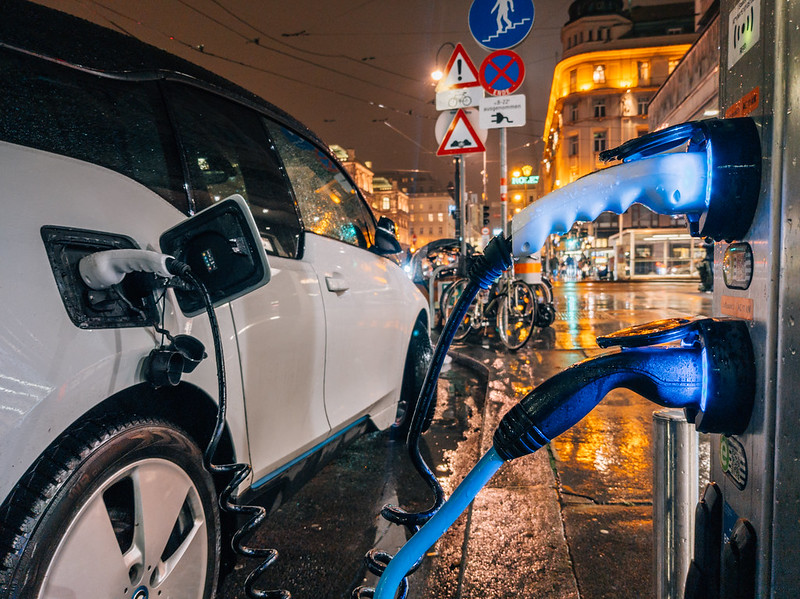
Editor’s Note: The opinions expressed here by Impakter.com columnists are their own, not those of Impakter.com. In the Featured Photo: Electric car charging at a charging port on December 10, 2020. Source: Ivan Radic, Flickr.