Impakter
  • Environment
    • Biodiversity
    • Climate Change
    • Circular Economy
    • Energy
  • FINANCE
    • ESG News
    • Sustainable Finance
    • Business
  • TECH
    • Start-up
    • AI & Machine Learning
    • Green Tech
  • Industry News
    • Entertainment
    • Food and Agriculture
    • Health
    • Politics & Foreign Affairs
    • Philanthropy
    • Science
    • Sport
  • Editorial Series
    • SDGs Series
    • Shape Your Future
    • Sustainable Cities
      • Copenhagen
      • San Francisco
      • Seattle
      • Sydney
  • About us
    • Company
    • Team
    • Global Leaders
    • Partners
    • Write for Impakter
    • Contact Us
    • Privacy Policy
No Result
View All Result
Impakter logo
No Result
View All Result
Vanuatu and Climate Change: How The Most At-risk Country in the World Addresses the Challenge

Vanuatu and Climate Change: How The Most At-risk Country in the World Addresses the Challenge

Small but mighty: How Vanuatu’s private sector calls on World Leaders & Business Leaders to do more and better for climate resilience 

Glen Craig Chair, Vanuatu Business Resilience Council, and Director at Kontiki FinancebyGlen Craig Chair, Vanuatu Business Resilience Council, and Director at Kontiki Finance
November 11, 2021
in Business, COP26, Politics & Foreign Affairs
0

Vanuatu rarely makes the headlines. Can you even locate us on a map? Yet, the world should pay attention, because we have a head start dealing with the climate crisis – and if you learn from us, maybe we can better tackle the worst impacts of climate change, together. 

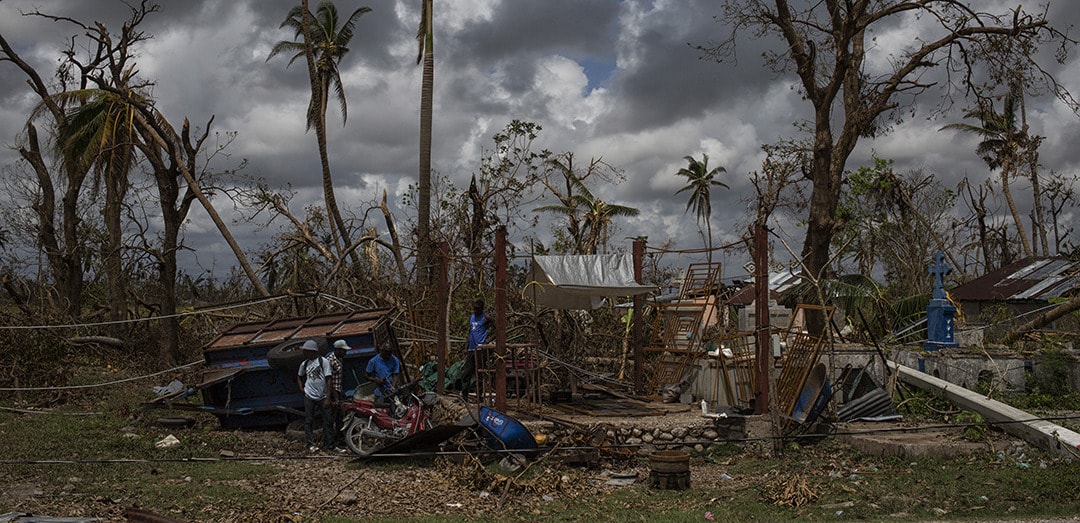
When Tropical Cyclone Harold, a category 5 cyclone with winds of 270 km per hour, hit northern Vanuatu in April 2020, we thought we were ready. I’m a business owner and the Chair of the Vanuatu Business Resilience Council (VBRC), a business federation coordinating disaster preparedness and response by the private sector. But I wasn’t prepared for the level of devastation we witnessed.

Torrential rains led to landslides and flash flooding, leaving behind extensive damage. Up to 90% of families lost their houses in hardest-hit areas, and 60% of croplands were destroyed, compromising food security nationwide. 

Because of COVID-19 travel restrictions, international support was limited. We had to step up. My colleague Millie, through her company, 3 Link Satellite communication, provided connectivity to cut-off areas. We mobilized local boats and logistical resources to deliver emergency food and shelter to remote islands. 

Our experience running businesses in challenging rural contexts allowed us to find efficient and practical solutions. This crystalised the key role local businesses can play, alongside civil society and governments, to respond, mitigate, and adapt to rising climate risks. This can serve as an inspiration worldwide, from Florida to Venice. 

How Vanuatu addresses climate change challenges: the key role of local businesses

In 2021, Vanuatu was ranked the most at-risk country in the world, so taking an innovative, proactive, whole-of-society approach towards climate resilience isn’t just an ideal. It’s what we have to do for companies to stay in business, and for our country’s survival.

Micro, small and medium enterprises (MSMEs) – the backbone of the economy – are the most impacted by climate-related disasters. In Vanuatu, these are village shops selling essential foods and household items, small boat services linking people from village to village, small-sized hotels providing jobs to our youth, and farmers selling their food crops to urban centres. 

This has profound economic implications. The current rate of sea-level rise, for example, is already eroding jetties and wharves used by small boats that deliver food to local villages. However, while local businesses are among the most impacted, they’re also the first to respond to increasing needs.  

That’s why the Vanuatu Business Resilience Council has joined the UN’s Connecting Business initiative, which engages with the private sector strategically before, during, and after emergencies.  Our projects include local business continuity training, supporting a humanitarian response when needed, and mid-term recovery programmes. We aren’t only supporting the private sector, but empowering it to fulfill its role as a leader in climate action, building climate resilience in our communities. 

With adequate support, innovative technologies for mitigation and adaptation – currently unavailable simply because of logistics and costs – could become the norm. For example, we partnered with Oxfam and used blockchain technologies to provide cash transfers in remote areas, and we’re working with the Government to use that same cutting-edge technology to offer incentives for COVID-19 vaccinations. 

We can do all this thanks to the flexibility and logistical capacity of our local business networks.  

Aid packages distribution Source: VBRC/Glen Craig

COP26: Vanuatu calls for greater investment in climate adaptation financing for Small Islands Developing States (SIDS) but funds should also go to the private sector

However, acting locally is not enough. At COP26, Vanuatu representatives are calling for greater investment in adaptation financing for Small Islands Developing States (SIDS). 

Current ambitions put the world on a pathway for a temperature rise of more than 2.7C by the end of the century, and a rise in global emissions of 16% by 2030, a doomsday scenario for the Pacific Islands. 

In 2019, SIDS received just 0.28% of the global total of climate finance mobilized (US$ 80 million). Even if the target of US$ 100 billion per year was met, there would be a major shortfall for the private sector, as funds are mostly channeled through governments or NGOs. Without private sector access to finance through grants and loan modalities, the Pacific won’t meet its climate targets – let alone survive. That’s why we’re calling for a massive scale-up in climate finance, with dedicated funding to local businesses engaged in climate resilience. 

The private sector has to be seen as a proactive member of the humanitarian and climate resilience community, alongside NGOs and governments. For too long, we’ve been working hard behind the scenes, supporting community resilience without benefitting from the support enjoyed by other local partners.

Rebuilding in Vanuatu Source: VBRC/Glen Craig

We need additional financial and technical resources to continue upscaling our efforts as climate change intensifies. 

Dedicated funding will help us better prepare for disasters by developing continuity plans, providing MSMEs with access to emergency communications and affordable climate insurance, and supporting adaptation projects in the hospitality sector, among other things.   

The resources are available, but the private sector in Vanuatu, SIDS, and beyond now require access and predictability. Businesses may be part of the problem, but it’s time they’re also acknowledged as a key actor and part of the solution. 


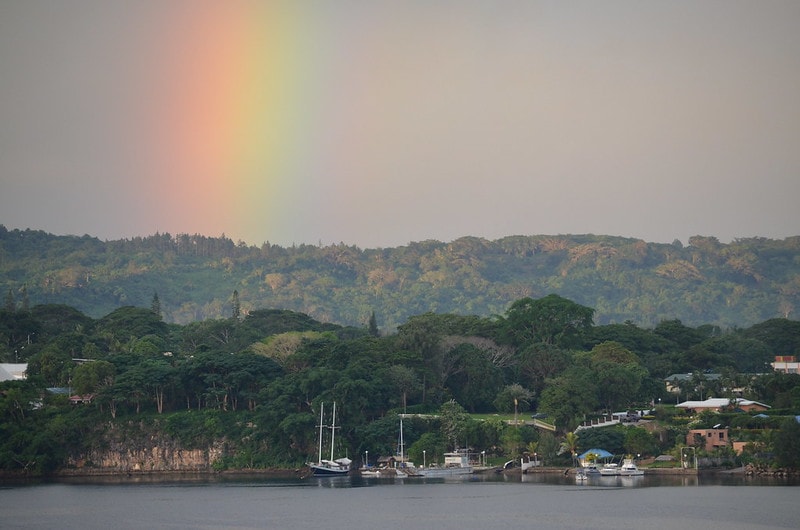
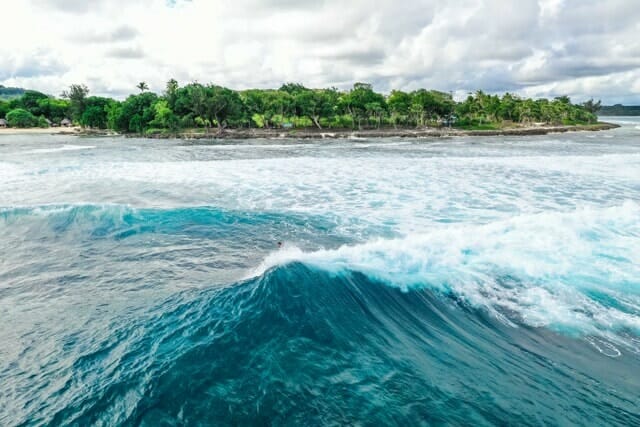
Editor’s Note: The opinions expressed here by Impakter.com columnists are their own, not those of Impakter.com. — In the Featured Photo: Vanuatu Source: Glen Craig

 

Tags: resilient recoverySmall and Medium EnterprisesSmall Islands Developing States (SIDS)VanuatuVanuatu Business Resilience Council
Previous Post

U.S. Congress and Defense Establishment:  Early Signs of One Health On Horizon

Next Post

As COP26 Draws To A Close, Promising New Deals Are Made

Related Posts

Invoice Financing
Business

Understanding Invoice Financing: Definitions, Benefits and How It Works

In today’s dynamic business environment, ensuring a steady cash flow can often pose a significant challenge. Many companies, especially medium-sized...

byMatt Davies
November 29, 2024
ICJ climate change
Climate Change

ICJ Advisory Opinion and the Future of Climate Responsibility

The ongoing advisory proceedings before the International Court of Justice (ICJ) on the obligations of States in respect of climate change represent...

byInternational Institute for Sustainable Development (IISD)
September 12, 2024
small island nations
Climate Change

Small Island Nations Turn to UN Court for Protection Against Climate Change

The case is officially being brought by the Commission of Small Island States on Climate Change and International Law (Cosis)...

byDavid Bass
September 12, 2023
What the International Court of Justice's Upcoming Advisory Opinion Means for Climate Action
Climate Change

What the International Court of Justice’s Upcoming Advisory Opinion Means for Climate Action

On March 28, the United Nations General Assembly (UNGA) adopted a historic resolution asking the International Court of Justice (ICJ)—the UN's principal...

byInternational Institute for Sustainable Development (IISD)
April 12, 2023
Working Hand in Hand to Build Sustainable Agrifood Systems in the Pacific
Food and Agriculture

Working Hand in Hand to Build Sustainable Agrifood Systems in the Pacific

In recent years, I have often had the chance to see for myself the incredible resilience and determination of Pacific...

byLaurent Thomas - Deputy Director-General of the Food and Agriculture Organization of the United Nations (FAO)
March 7, 2023
Vanuatu Receives Critical Support for Climate Change Protections
Climate Change

Vanuatu Receives Critical Support for Climate Change Protections

On Friday, Vanuatu’s latest push from the International Court of Justice (ICJ) to implement climate change protections for vulnerable countries...

byElizabeth Partsch
May 13, 2022
Solopreneurs and Microenterprises Aren’t Too Small to Contribute to a More Inclusive Economy
Business

Solopreneurs and Microenterprises Aren’t Too Small to Contribute to a More Inclusive Economy

This article is part of an editorial collaboration with BCorporation. The BCorp Series can be found here. The original publication can...

byImpakter Editorial Board
January 22, 2019
un photo-hands-ndebele tribe-africa
Politics & Foreign Affairs

Promoting Sustainable Investments to Attain the SDGs

In 2016 the European Union launched an ambitious new initiative: the External Investment Plan (EIP) and its new European Fund...

byDr. Roberto Ridolfi - Assistant Director General - UN Food and Agriculture Organisationand1 others
March 21, 2017
Next Post
cop26 negotiations

As COP26 Draws To A Close, Promising New Deals Are Made

Recent News

Canada Sets Green Investment Rules; UK Regulator Probes WH Smith; Louvre Workers Call Off Strike;Trump Allies Clash With Fannie, Freddie Staff.

A New Rulebook for Green Capital: Canada

December 19, 2025
brother and sister playing in a playground

Sustainable Playground Materials and Design for Cities

December 19, 2025
soil

To Prevent Ecological Collapse, We Must Start With the Soil

December 19, 2025
  • ESG News
  • Sustainable Finance
  • Business

© 2025 Impakter.com owned by Klimado GmbH

No Result
View All Result
  • Environment
    • Biodiversity
    • Climate Change
    • Circular Economy
    • Energy
  • FINANCE
    • ESG News
    • Sustainable Finance
    • Business
  • TECH
    • Start-up
    • AI & Machine Learning
    • Green Tech
  • Industry News
    • Entertainment
    • Food and Agriculture
    • Health
    • Politics & Foreign Affairs
    • Philanthropy
    • Science
    • Sport
  • Editorial Series
    • SDGs Series
    • Shape Your Future
    • Sustainable Cities
      • Copenhagen
      • San Francisco
      • Seattle
      • Sydney
  • About us
    • Company
    • Team
    • Global Leaders
    • Partners
    • Write for Impakter
    • Contact Us
    • Privacy Policy

© 2025 Impakter.com owned by Klimado GmbH